
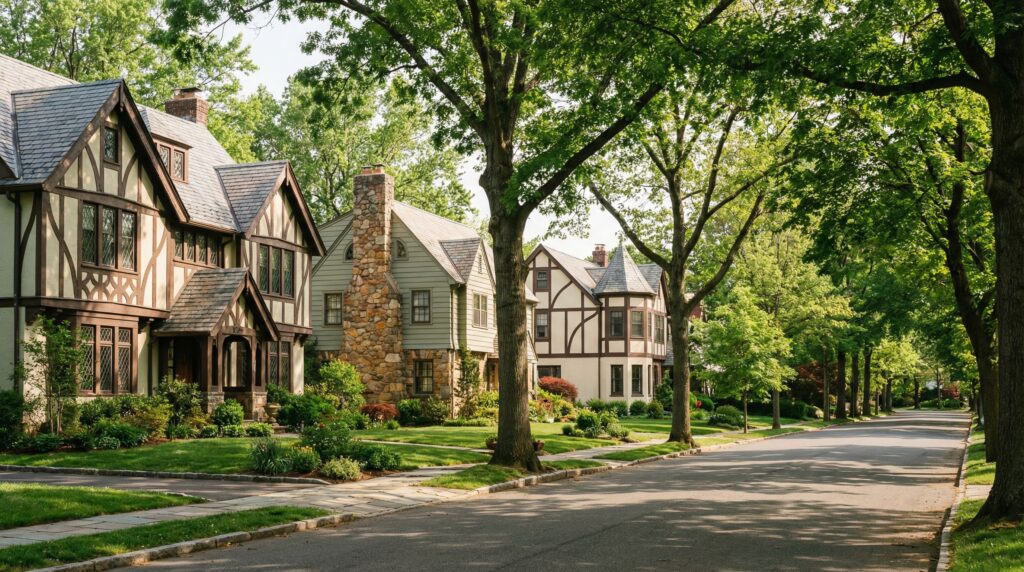
Tudor premium pricing rarely stems from size or location alone. Rather, it emerges from a constellation of architectural details and construction quality that define the style itself. Understanding what creates value—and what destroys it—is essential for both buyers assessing long-term investment potential and sellers contemplating updates. The surprising truth: many well-intentioned improvements actually diminish property worth.
The homes built between 1920 and 1945 represent an era when craftsmanship was not optional. What survives intact commands premium pricing not because of fashion, but because authenticity is increasingly irreplaceable.
What Defines a Tudor Home
The Tudor style—an American interpretation of medieval English architecture that flourished between roughly 1920 and 1945—represents a deliberate aesthetic choice. Unlike colonial or Victorian styles that emphasize symmetry, Tudors prioritize asymmetry, texture, and the visual expression of structural elements as design itself.
Half-timber framing (whether exposed or infill), steeply pitched roofs, arched openings, decorative chimneys, and hand-laid masonry defined the style. These weren’t decorative afterthoughts; they were the building methodology. A properly constructed Tudor uses its structural reality as its visual expression.
This distinction matters profoundly: when these elements are removed or replaced with modern alternatives, the home loses not just aesthetic character but the evidence of its construction logic. A Tudor stripped of period details becomes, essentially, a generic residence with unusual proportions.
Elements That Drive Premium Value
Hand-Laid Masonry
Original brickwork and stonework command premium pricing because they represent both craftsmanship and permanence. Hand-laid brick, particularly when laid in varied patterns with period-appropriate mortar, indicates construction quality and authenticity. These walls have weathered a century; they will weather centuries more.
The premium stems from scarcity: new construction cannot replicate this work at any cost. The texture, color variation, mortar characteristics, and irregularities that define authenticity are precisely what modern manufacturers eliminate.
Original Leaded Glass
Casement windows featuring small panes of hand-blown or leaded glass represent significant value. These windows perform poorly by modern standards (poor insulation, single-pane heat loss), yet they command premium pricing. Why? Because they’re irreplaceable.
A buyer who values architectural authenticity will pay substantially more for original leaded casements than for modern replacements—even though the replacements perform better thermally. The leaded glass conveys permanence, heritage, and visual authenticity that vinyl cannot approximate.
Historic Plaster
Original plaster walls and ceilings represent both quality and rarity. Plaster applied over wooden lath creates superior sound dampening, fire resistance, and durability compared to modern drywall. A properly maintained plaster interior suggests careful stewardship and authenticity.
More importantly, plaster is increasingly rare. New construction doesn’t use it. Restoring original plaster costs significantly more than drywall replacement, yet homes with preserved plaster command material price premiums because discerning buyers recognize what they’re acquiring.
Period Millwork
Trim work, baseboards, built-in cabinetry, and interior woodwork from the Tudor era exhibit proportions and details distinctly different from modern production millwork. Doors with solid wood construction, heavy balusters, elaborate brackets, and hand-carved details convey both the skill of the original craftsmen and the permanence of the home.
This millwork is functional art. Replacing it with modern alternatives, regardless of quality, removes evidence of the original construction standards and design intentionality.
Decorative Chimneys and Rooflines
Elaborate chimney designs—stacked brick patterns, decorative corbels, varied heights—define Tudor visual character. Steeply pitched roofs with varied elevations, dormers, and cupolas create the distinctive silhouette. These elements, while less critical to function than masonry or structure, are architecturally essential.
A Tudor home with simplified rooflines or removed chimneys is architecturally compromised regardless of how well the simplification was executed. The value premium for visual authenticity remains intact.
Slate Roofs
Original slate roofing represents a century-spanning investment. While repair costs exceed asphalt shingles, the longevity justifies the expense. A proper slate roof will outlast the owners who maintain it. This permanence conveys value independent of aesthetic preference.
More critically, asphalt shingles visually simplify the roofline, altering the home’s entire appearance. A slate roof isn’t premium pricing because shingles fail faster; it’s premium pricing because the original material is the correct material.
Cast Iron Radiators
Period-appropriate cast iron radiators, even when replaced with modern heating systems, convey authenticity. Their visual presence—ornate castings, substantial material, industrial-era design—reinforce the narrative of craftsmanship that defines Tudor homes.
Many sellers remove radiators and conceal them. Discerning buyers recognize this as architectural erasure. Homes with radiators intact command premiums; homes with radiators removed (even when heating systems function perfectly) suggest less careful stewardship of original character.
Improvements That Quietly Destroy Value
Vinyl Replacement Windows
Among the most damaging “improvements” to Tudor authenticity, vinyl replacement windows fundamentally alter the home’s appearance. Period-appropriate windows feature narrow muntins (the divisions between panes), small individual panes, and wood construction. Vinyl replacements, by contrast, are visually chunky and lack the proportional refinement of originals.
From a market perspective: homes with original leaded or wooden casements command material premiums over homes with vinyl replacements. The replacement was likely cheaper than restoration, yet it reduced home value substantially.
Asphalt Shingles
Replacing slate or wood shake with modern asphalt shingles simplifies the roofline visually and removes historic authenticity. While the functional need may be legitimate (slate requires maintenance, eventually fails), the market penalizes this replacement heavily because it fundamentally alters visual character.
The irony: installing a proper slate roof renovation, while expensive, increases value. Replacing with asphalt, while cheaper, decreases value. The buyer willing to pay premium pricing for Tudor authenticity penalizes utilitarian solutions.
Drywall Over Plaster
Covering or replacing original plaster with drywall removes evidence of historical construction. Even when plaster is damaged, restoration costs money that drywall doesn’t—yet discerning buyers will pay more for restored plaster than for drywall replacement.
This represents a fundamental market principle: authenticity commands premium pricing, even when authenticity requires maintenance. Utilitarian replacement reduces value.
Modern Fixtures Ignoring Proportion
Light fixtures, door hardware, plumbing fixtures, and cabinetry designed for modern sensibilities often feel visually jarring in Tudor interiors. A farmhouse-style kitchen with modern stainless steel and minimalist hardware sits awkwardly in a space designed for period-appropriate detailing.
The disconnect creates what appraisers call “deferred authenticity.” Buyers experience visual cognitive dissonance: the space is Tudor, but the details suggest it was “updated” rather than “preserved.” Value suffers because authenticity is compromised.
Visible Electrical and Plumbing
Modern electrical conduit, PVC plumbing, and exposed mechanical systems interrupt the visual integrity of original interiors. While necessary for safety and function, exposed modern infrastructure in historically-significant spaces creates visual compromise.
Value-conscious renovations conceal modern systems within walls or ceilings. Making modern infrastructure invisible preserves the narrative of historical authenticity, even though the systems themselves are entirely contemporary.
Quality Restoration vs. Value-Killing Shortcuts
The distinction between authentic restoration and utilitarian replacement defines value destruction. A slate roof replacement, while expensive, adds value. An asphalt shingle replacement, while economical, removes value. This seems paradoxical until you understand that Tudor premium pricing flows from architectural authenticity, not from rational utility assessment.
The buyer paying $2.3M for a Montclair Tudor isn’t optimizing for cost-per-square-foot or payback periods. They’re acquiring authenticity, permanence, and heritage. Updates that compromise these qualities destroy value faster than they save money.
Evaluating a Tudor’s Architectural Integrity
Before purchasing or making renovation decisions, evaluate the home’s authenticity across key dimensions:
- Roofline: Original pitch, dormers, and chimneys intact or modified?
- Windows: Period-appropriate casements or vinyl replacements?
- Exterior Materials: Hand-laid masonry or repointed with modern mortar? Original cladding or vinyl siding?
- Interior Walls: Historic plaster or drywall over plaster? Original wood flooring or modern replacement?
- Hardware and Fixtures: Period-appropriate detailing or modern substitutes?
- Systems vs. Aesthetics: Modern mechanical systems (good) balanced against visual authenticity (essential)?
The home that scores highest on this checklist—preserved roofline, original windows, original masonry, plaster walls, period millwork, appropriate fixtures—commands the premium pricing. Homes with compromises (vinyl windows, asphalt roof, visible modern infrastructure) experience value reduction proportional to the degree of compromise.
Why This Matters for Your Investment
Tudor premium pricing reflects scarcity and authenticity. As these homes age and newer construction replaces historic structures, authenticity becomes increasingly rare. The market logic becomes clear: preserve and restore, or accept value reduction through utilitarian replacement.
A buyer in 2026 understanding this principle will pay more for a well-preserved, architecturally authentic home than for a better-functioning but architecturally compromised alternative. This preference will intensify as scarcity increases.